
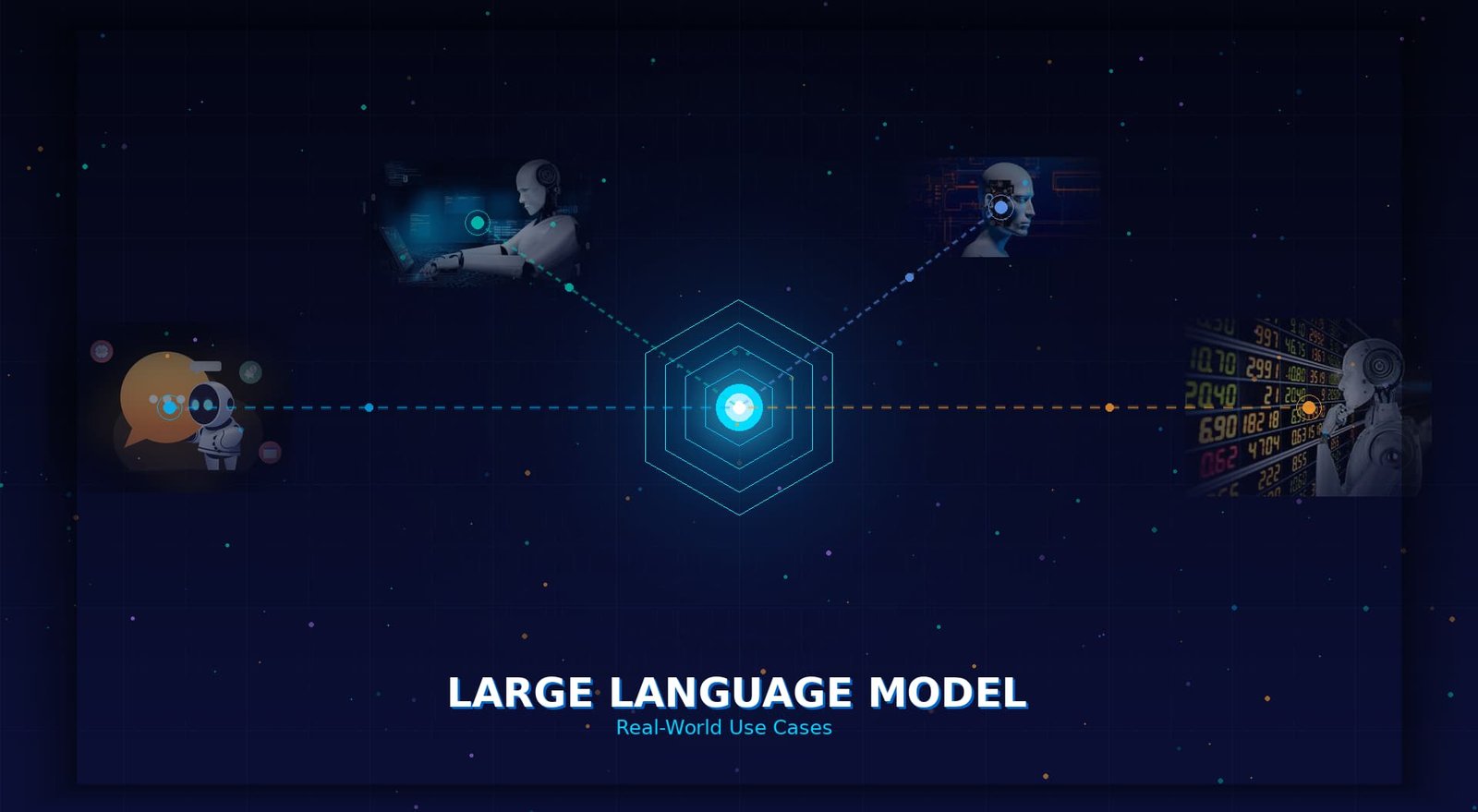
Picture starting your day buried in support tickets, slow responses, and customers threatening to leave. Burnout, high costs, and lost revenue — these pain points are not unique to one business. They exist everywhere.
Now, artificial intelligence and large language model use cases are flipping the script. Large language models are not just hype. They are automating tedious work, accelerating responses, and making teams dramatically more productive across every major industry.
The most common large language model use cases go far beyond chatbots. In this guide, you will discover 15 practical, proven examples of how organizations are using LLMs to cut costs, boost results, and gain a competitive edge — including five overlooked applications that most articles never cover.
Each example is clear and actionable so that anyone can get started today. By the end of this article, you will have identified at least one large language model use case you can test in under 30 minutes.
The global LLM market reached $7.77 billion in 2025 and is projected to surpass $149.89 billion by 2035, growing at a CAGR of 34.44% — making it one of the fastest-growing technology markets globally.
— Precedence Research, 2026What Is a Large Language Model?
A Large Language Model (LLM) is an advanced AI system trained on billions of text examples to understand, generate, and reason about human language. The most well-known examples include GPT-4 (OpenAI), Claude (Anthropic), Gemini (Google), and LLaMA (Meta).
Unlike traditional software that follows rigid, pre-programmed rules, LLMs learn complex patterns directly from data. A single model can write code, summarize lengthy reports, translate languages, answer nuanced questions, and perform dozens of other language-related tasks — often with near-human quality.
What truly sets large language models apart is their scale and versatility. One model handles hundreds of tasks without needing to be reprogrammed for each individual job. This flexibility is precisely what makes large language model use cases so transformative across industries.
Why Large Language Model Use Cases Matter in 2026
We are living through a fundamental shift in how knowledge work gets done, and LLMs are at the center of that change. Organizations that identify and act on the right large language model use cases today will hold a measurable competitive advantage over those that delay.
- The global LLM market reached $7.77 billion in 2025 and is projected to surpass $149.89 billion by 2035, growing at a CAGR of 34.44% — making it one of the fastest-growing technology markets in history. (Precedence Research, 2026)
- McKinsey estimates that generative AI could add $2.6 trillion to $4.4 trillion in annual global economic value across industries. (McKinsey Global Institute)
- GitHub research shows that developers using Copilot complete tasks 55% faster than those who do not. (GitHub Research)
- More than 92% of Fortune 500 companies are actively using or testing LLM-powered tools across their operations. (OpenAI)
- Chatbots & Virtual Assistants alone captured a 28% share of the entire LLM application market in 2025 — the single largest use case category. (Precedence Research, 2026)
Organizations that identify and act on the right large language model use cases today will hold a measurable competitive advantage over those that delay.
13+ Widely Adopted Large Language Model Use Cases
The following ten large language model use cases represent the most proven, highest-impact applications currently in production across global organizations.
1. Automated Customer Support
One of the most widely deployed large language model use cases is intelligent customer support automation. LLMs power next-generation chatbots that go far beyond scripted menus — they understand context, resolve complex queries, and escalate to human agents only when genuinely necessary.
Real-World Example: Klarna’s OpenAI-powered assistant now handles two-thirds of all customer service conversations — the equivalent of 700 full-time agents. It resolves most issues in under two minutes (down from eleven) and operates 24/7 in 35+ languages, contributing to an estimated $40 million profit improvement.
2. Code Generation and Software Development
LLMs have fundamentally changed how developers write software. AI coding assistants now handle boilerplate generation, bug detection, test writing, code review, and documentation — allowing engineers to focus on architecture and problem-solving.
Training these powerful LLMs requires specialized hardware — if you’re curious, read our guide on AI Hardware Development: 2026 Guide.
Real-World Example: GitHub Copilot helps developers complete coding tasks 55% faster, reducing average task completion time from 2 hours 41 minutes to just 1 hour 11 minutes. Task completion rates also improved from 70% to 78%. (GitHub Research, 2023)
3. Financial Analysis and Compliance
Financial institutions are leveraging large language model use cases to process earnings reports, analyze market sentiment, generate investment summaries, and streamline compliance workflows at speeds that human analysts cannot match.
Real-World Example: Bloomberg built BloombergGPT, a specialized 50-billion-parameter model trained exclusively on financial data. It outperforms general-purpose LLMs on tasks such as sentiment analysis and financial named entity recognition. Separately, Socure’s AI compliance assistant delivered an 80% reduction in case review time and up to 60% savings in compliance costs.
BloombergGPT, FinGPT (open source), AlphaSense
4. Content Creation and Marketing
Marketing teams use large language model use cases to produce blog posts, social media content, email campaigns, product descriptions, and advertising copy at scale — without sacrificing brand voice or quality.
Real-World Example: Coca-Cola partnered with Bain & Company and OpenAI to deploy GPT-4 for personalized marketing content creation, producing thousands of unique ad variations efficiently. Platforms like Jasper AI have built entire businesses around LLM-powered content generation for marketing teams.
ChatGPT, Claude, Copy.ai, Writesonic
5. Legal Document Review and Analysis
Law firms and corporate legal departments use LLMs to review contracts, identify risk clauses, extract key terms, summarize case law, and conduct legal research in a fraction of the time traditional processes require.
Real-World Example: Harvey AI, backed by OpenAI and used by major law firms including Allen & Overy, can review hundreds of contracts overnight and identify issues that human reviewers might miss after long working hours. It has rapidly become one of the most impactful large language model use cases in professional services.
6. Healthcare Documentation and Diagnostics
In healthcare, large language model use cases are reducing administrative burden while improving clinical accuracy. LLMs assist with documentation, patient record summarization, discharge summary generation, and diagnostic support — giving physicians more time for direct patient care.
LLMs are playing a central role in the broader transformation of healthcare through AI. To explore how AI is reshaping diagnosis, drug discovery, and patient care beyond documentation, read our in-depth guide: How AI Is Transforming Healthcare in 2026.
Real-World Example: Nuance DAX, powered by Microsoft Azure AI, listens to doctor-patient conversations and automatically generates structured clinical notes. Hospitals report saving physicians two to three hours daily on documentation. Google’s Med-PaLM 2 has also achieved expert-level performance on medical licensing exam questions.
Nuance DAX, Suki AI, Google Med-PaLM 2
7. Education and Personalized Learning
LLMs are transforming education by acting as personalized tutors that adapt to each student’s pace and learning style. They answer questions in real time, explain concepts multiple ways, generate quizzes, and provide instant feedback on written work.
Real-World Example: Khan Academy launched Khanmigo, a GPT-4-powered tutor built on the Socratic method — guiding students through problems with questions rather than giving direct answers. Duolingo Max uses GPT-4 to offer real-time grammar explanations and personalized role-play conversations for language learners.
8. HR, Recruitment and Talent Management
HR teams are using large language model use cases to streamline the entire hiring lifecycle — from writing compelling job descriptions and screening resumes to generating personalized outreach messages for passive candidates.
Real-World Example: Companies including Eightfold.ai use LLMs to match candidates with suitable roles, significantly reducing time-to-hire. LLMs analyze resumes at scale, surface top candidates, and help HR teams craft personalized communication without manual effort.
9. E-Commerce and Personalized Recommendations
Online retailers are deploying large language model use cases to generate product descriptions, power intelligent search, and deliver personalized shopping experiences that increase conversion rates and average order value.
Real-World Example: Shopify Magic uses LLMs to help merchants automatically generate product descriptions, email subject lines, and marketing copy. The platform also powers AI-driven product recommendation engines that respond to natural language queries from shoppers.
10. Data Analysis and Business Intelligence
One of the most powerful large language model use cases for enterprises is natural language data analysis — allowing business users to query complex datasets in plain English without writing SQL or relying on data analysts.
Real-World Example: Morgan Stanley deployed GPT-4 internally to help financial advisors instantly search and synthesize information from thousands of proprietary research documents. Advisors ask natural language questions and receive precise, cited answers from the firm’s knowledge base within seconds.
ThoughtSpot Sage, Tableau AI, Microsoft Copilot for Data
11. Mental Health Support and Digital Therapy
One of the most sensitive yet impactful large language model use cases emerging in 2026 is mental health support. LLMs now power AI companions that use evidence-based frameworks such as Cognitive Behavioral Therapy (CBT) to help users manage anxiety, depression, and stress between professional therapy sessions.
Real-World Example: Wysa, an AI mental health companion active in over 95 countries with more than 10 million users, uses LLM-powered conversations to guide users through CBT exercises and emotional check-ins. Youper, another clinically validated platform, has been studied in peer-reviewed research and shown to meaningfully reduce anxiety and depression symptoms over time.
Important Note: These tools are designed to supplement professional care, not replace licensed therapists. They are most effective as accessible support between therapy sessions.
12. Scientific Research and Drug Discovery
Pharmaceutical companies and academic research institutions are using large language model use cases to dramatically accelerate drug discovery — analyzing scientific literature at scale, predicting molecular properties, and generating novel therapeutic hypotheses that human researchers might take years to reach independently.
Real-World Example: Insilico Medicine used an AI system combining LLMs with generative chemistry models to identify a new drug candidate for idiopathic pulmonary fibrosis in just 18 months — a process that traditionally requires four to five years. The compound has progressed to clinical trials. Research tool Elicit uses LLMs to help scientists synthesize findings across thousands of papers in minutes.
13. Supply Chain and Logistics Optimization
Perhaps the most underrated of all large language model use cases in enterprise settings, supply chain optimization is seeing rapid LLM adoption. Companies use these models to interpret supplier contracts, parse logistics reports, forecast demand from unstructured data, and communicate disruption scenarios across global operations in plain language.
Real-World Example: Amazon uses LLMs internally to process millions of seller communications, automatically flag supply disruptions, and generate actionable reports that previously required teams of analysts. The result is faster operational decision-making and measurable reductions in stockout events.
Coupa AI, o9 Solutions, Microsoft Copilot for Supply Chain
14. Accessibility Tools for People with Disabilities
Large language model use cases are making technology meaningfully more accessible for people with visual impairments, hearing loss, dyslexia, and cognitive disabilities. This rapidly expanding category combines humanitarian impact with genuine business opportunity.
Real-World Example: Microsoft’s Seeing AI app uses LLMs to describe images, read text aloud, identify people and emotions, and narrate entire scenes for visually impaired users — and has been downloaded over 500,000 times. The World Health Organization estimates that over 2.5 billion people need assistive products globally, a gap that LLM-powered tools are uniquely positioned to address.
Additional applications include real-time captioning for deaf users, automatic text simplification for people with dyslexia, and communication assistance for non-verbal individuals using augmentative communication devices.
15. Cybersecurity Threat Detection and Response
Security operations teams are deploying large language model use cases to analyze massive volumes of security logs, identify anomalous behavioral patterns, generate plain-English incident reports, and accelerate threat response — capabilities that are increasingly essential as cyberattacks grow in sophistication.
Real-World Example: Microsoft Security Copilot processes 65 trillion security signals daily using LLMs, summarizing complex incidents in plain language and suggesting actionable remediation steps. It enables junior security analysts to respond with the context and confidence of a senior expert. For SaaS companies handling sensitive customer data, this large language model use case is particularly high-value.
Challenges and Limitations of Large Language Models
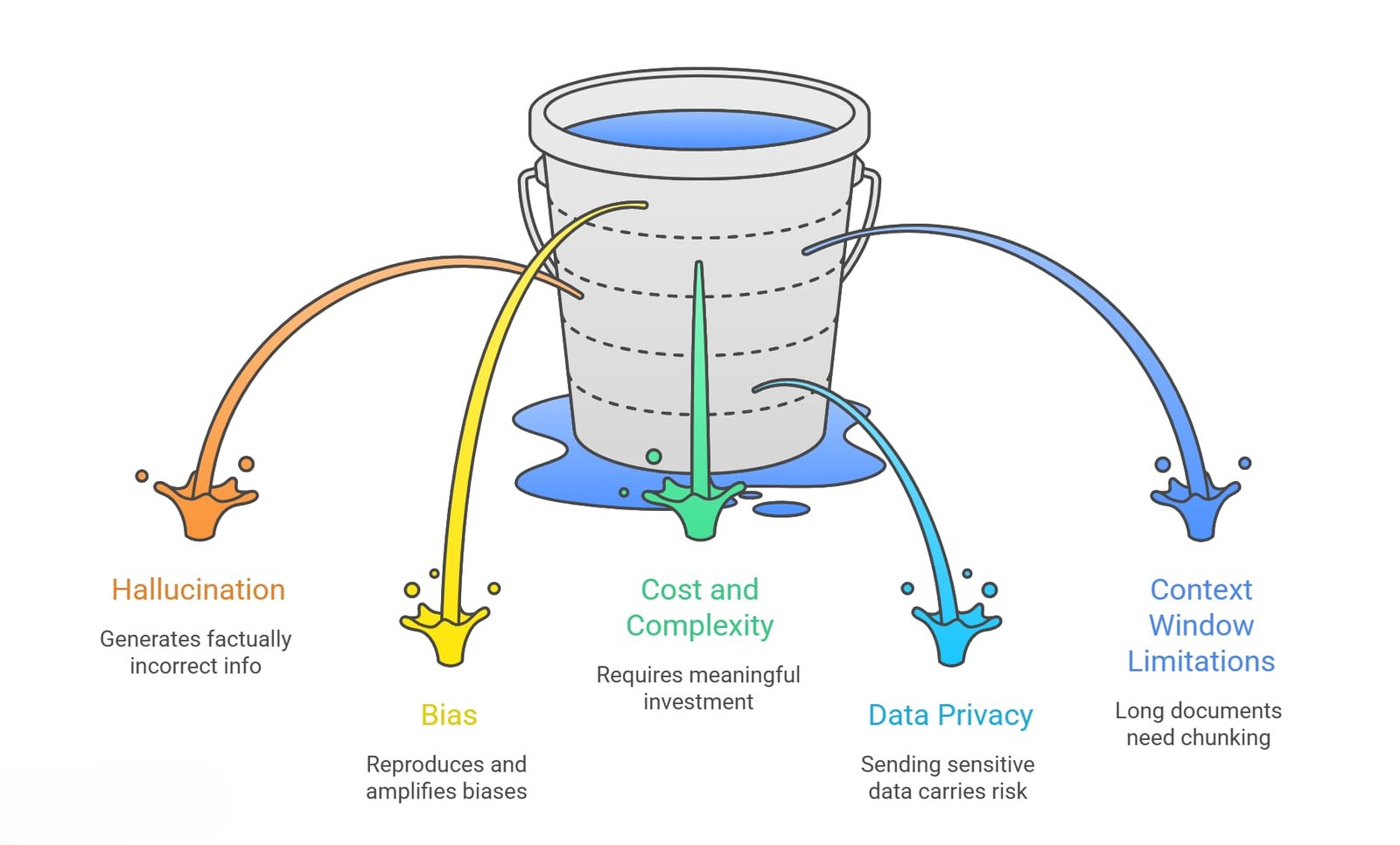
A balanced understanding of large language model use cases requires acknowledging where these systems still fall short. Here are the key challenges organizations face in 2026:
- Hallucination: LLMs can generate confident but factually incorrect information. Always implement human oversight for high-stakes decisions such as medical diagnosis or financial reporting.
- Bias: Models trained on biased data can reproduce and amplify those biases in outputs — a critical concern in hiring, lending, and healthcare applications.
- Cost and Complexity: Enterprise-scale LLM deployments require meaningful investment, though open-source models are significantly reducing this barrier in 2026.
- Data Privacy: Sending sensitive business data to third-party LLM APIs carries real privacy risk. Private cloud deployment or on-premise models are recommended for regulated industries.
- Context Window Limitations: Very long documents may need to be chunked or summarized before processing, which can introduce errors in complex analytical tasks.
The trajectory is clear despite these limitations: each successive generation of large language models is more accurate, more efficient, and more privacy-conscious than the last.
How to Get Started with Large Language Model Use Cases Today
Exploring large language model use cases does not require a technical background or significant budget. Here is a practical path regardless of your role:
- Free Tier Entry: Start with ChatGPT (free), Claude.ai (free), or Google Gemini (free) to explore core capabilities firsthand.
- For Developers: Use the OpenAI API or Anthropic API for programmatic access, or run open-source models such as LLaMA 3 locally via Ollama for complete data privacy.
- For Businesses: Evaluate Microsoft Copilot (integrated across Office 365) or Google Workspace AI for immediate productivity gains across email, documents, and meetings.
- For Specific Industries: Prioritize vertical-specific tools — Harvey AI for legal, Nuance DAX for healthcare, BloombergGPT for financial services.
Select one large language model use case from this guide that aligns with your current work. Spend 30 minutes testing it with a free tool this week. That is the fastest path to understanding how LLMs can create real value for you.
Conclusion
Large language model use cases are no longer experimental — they are producing measurable business results across every major industry in 2026. From intelligent customer support and code generation to drug discovery, accessibility innovation, and cybersecurity threat detection, LLMs represent one of the most consequential technology shifts of the past decade.
The organizations and professionals who understand these large language model use cases today are best positioned to lead in the years ahead. For the latest updates on AI, technology, and digital innovation, visit TechNewsHealth — your go-to source for cutting-edge tech and health insights. Whether your entry point is a simple chatbot pilot or a sophisticated data analysis workflow, the most important step is the first one.
The 13+ real-world large language model use cases covered in this guide are just the beginning. As models become more capable, more affordable, and more accessible, the range of practical applications will only continue to expand.
What large language model use case will you test first?
Frequently Asked Questions
Q: What industries benefit most from large language model use cases?
A: Financial services, healthcare, legal, software development, and customer support currently see the highest ROI from LLM adoption. However, virtually any industry that relies on text-based workflows, communication, or data analysis can identify high-value large language model use cases relevant to their operations.
Q: Are large language model use cases safe for sensitive business data?
A: It depends on your deployment model. Public API usage carries data privacy risks for sensitive information. For regulated industries or confidential data, private cloud deployments, on-premise models such as LLaMA 3, or enterprise agreements with explicit data protection guarantees are strongly recommended.
Q: How much does it cost to implement large language model use cases in a business?
A: Costs vary widely by scale and complexity. Small businesses can begin exploring large language model use cases using API-based solutions such as ChatGPT or Claude for $20 to $200 per month. Enterprise-grade deployments with custom training and private infrastructure can range from thousands to hundreds of thousands of dollars annually.
Q: What is the difference between an LLM and a traditional chatbot?
A: Traditional chatbots operate on fixed decision trees and fail when users ask unexpected questions. Large language models understand natural language context, handle diverse and unpredictable inputs, and generate flexible responses — making them far more capable and useful across the full range of real-world large language model use cases.
Q: Are large language models replacing human workers?
A: The evidence strongly suggests that LLMs augment human capabilities rather than replace workers outright. They handle repetitive, time-consuming tasks so employees can focus on creative, strategic, and relationship-driven work. GitHub Copilot, for example, makes developers significantly more productive — but it does not replace software engineers.
Leave a Reply